

Add a description of me here, please!

Add a description of me here, please!

Add a description of me here, please!

The Court approved a full rehabilitation of this nuisance property through a health and safety receivership. California Receivership Group worked with a local contractor to breathe new life into this long-abandoned building. The interior was cleaned out and stripped down to its studs, and the water-damaged roof was demolished. Once complete, construction was able to take off at an exceptional rate. The home was rebuilt and ready to be sold within 104 days, a record at C.R.G. to fully rehabilitate a dilapidated property. C.R.G added brand new windows, a new roof, appliances, floors, and much more to this property to make it ready for its next stage of becoming a place someone could call home again. The transformation achieved through the health and safety receivership remedy to this Los Angeles County property positively impacted its new owners and the surrounding neighborhood.

After our initial inspection, C.R.G. deemed the house uninhabitable and we worked with a local social worker and family members to relocate the residents to an assisted living facility to receive the proper care that they needed. With the receivership remedy in place, C.R.G. was able to clean up and rebuild the property into a beautiful single-family home. The property was sold to an owner who proved that they were capable of maintaining the home and the remaining sale proceeds were given to the original owners for their ongoing care.

In the 9 years prior to our appointment, local code enforcement tried to work with the owners of this motel to fix the 203 separate violations of state housing law onsite. There was a complete lack of maintenance of the property, demonstrated by the jet-black water in the swimming pool. The conditions at the motel were so severe that they actually sparked a fire. The fire caused considerable damage to a neighboring property, where it burned out and destroyed a business that had been operating at that location for over 35 years. This case is evidence of the significant danger that violations of municipal and state health and safety laws pose to the surrounding community.

Sadly, ownership changed hands and the property fell into disrepair. Upon our appointment by a Superior Court Judge, we found the 62-room hotel to be very poorly maintained with guests living in extremely unsanitary conditions. Rooms were soiled, some lacked running water, part of the roof was wide open allowing pigeons to roost inside, the hotel was infested with pests, and there were multiple broken windows. The hotel didn’t just lack basic amenities, it was also dangerous. A ceiling had collapsed in the basement, dry rot and exposure to the elements had damaged the structural integrity, there were unpermitted and unsafe modifications to the building, and electrical and plumbing installations were shoddy.

Originally built over a century ago, poor maintenance left this beautiful, Folk Victorian style home in a state of extreme disrepair. After seven years of local code enforcement efforts to encourage the owners to act on fixing the hazardous issues onsite were unsuccessful, we were appointed as the Receiver by a Superior Court Judge. We found the property structurally unsound, with hoarding conditions inside the house, as well as a major rodent and insect infestation. Neighbors were plagued by foul odors emanating from the property and accumulated junk, as well as overgrown landscaping, littered the exterior of the property leaving an eyesore that partially blocked the public sidewalk. We determined that the best cause of action was to renovate this historic property and remove the dangerous conditions.

In the eight years preceding our appointment this property was deserted, the run-down structure abandoned and left to rot. Years of neglect put the house at risk of collapsing and it subsisted with an accumulation of dirt and debris. The shabby exterior was an eyesore that blighted the otherwise well-maintained neighborhood and due to its precarious foundation and lack of maintenance, it was a danger to the surrounding community. City officials attempted to work with the owners to remedy the perilous conditions onsite but their efforts fell on deaf ears.

Although we’ve performed major renovations both before and since, this particular scenario made demolition the most feasible option. The continued negligence from the owners plus the comparatively low cost of leveling versus restoring allowed us to give the property a new beginning from the ground up. Once we had cleaned out the property and safely disposed of the hazardous material, we gave the City’s fire department the opportunity to use the property for a practice drill and training exercise, including a controlled burn—a fitting reversal of the property’s initial status as a fire hazard.

Once the pinnacle of its block, this property boasted exceptional craftsmanship and captivating grounds featuring trees bearing grapefruit, avocados, pecans, and oranges. But decades later, it had fallen into the hands of a compulsive hoarder whose mental illness included the acquisition of an estimated 40-80 cats that roamed the property; they used dirt in the basement as a litter box and the acrid smell proved overwhelming to inspectors. Even after initial cleanups, the stench permeated the property, particularly following rainfall that dampened the basement. The original builder’s niece, married at the property in 1972, burst into tears when she saw the extent of its demise.

A property deteriorated from an upscale establishment into a public nuisance. When the nuisance conditions were finally remedied, space was created for the property's redevelopment. While most would not have anticipated the decline of this once popular and prestigious establishment, the story is familiar to CRG. It shows just how effective health and safety receivership can be at remedying nuisance properties and initiating a ripple effect for revitalization efforts.

This liquor store received daily calls for police services to address shootings (one fatal), drug sales, and gang activity. Calls for police services stopped following our appointment due to our swift action to secure the property. Post-receivership the building is providing a much-needed function to the community.

This severely dilapidated property was left in ruin. Lack of oversight allowed pigeons to literally take it over. Upon inspection, we found that the roof was rotting through and there was no protection from the elements for about one-third of the house, leaving it extremely unsanitary and dangerous to be inside. It appeared to have been at least 10 years since the property was inhabited, and potentially longer since any maintenance had been done. Indeed, the property was an eyesore that stood out in the quiet, well-maintained neighborhood. Less than half a mile from an elementary and middle school, the property was an attractive nuisance to children who may have been inclined to wander on to it.

Originally built over a century ago, poor maintenance left this beautiful, Queen Anne style home in a state of extreme disrepair. After seven years of local code enforcement efforts to encourage the owners to act on fixing the hazardous issues onsite were unsuccessful, we were appointed as the Receiver by a Superior Court Judge. We found the property structurally unsound, with hoarding conditions inside the house, as well as a major rodent and insect infestation. Neighbors were plagued by foul odors emanating from the property and accumulated junk, as well as overgrown landscaping, littered the exterior of the property leaving an eyesore that partially blocked the public sidewalk. We determined that the best cause of action was to renovate this historic property and remove the dangerous conditions.

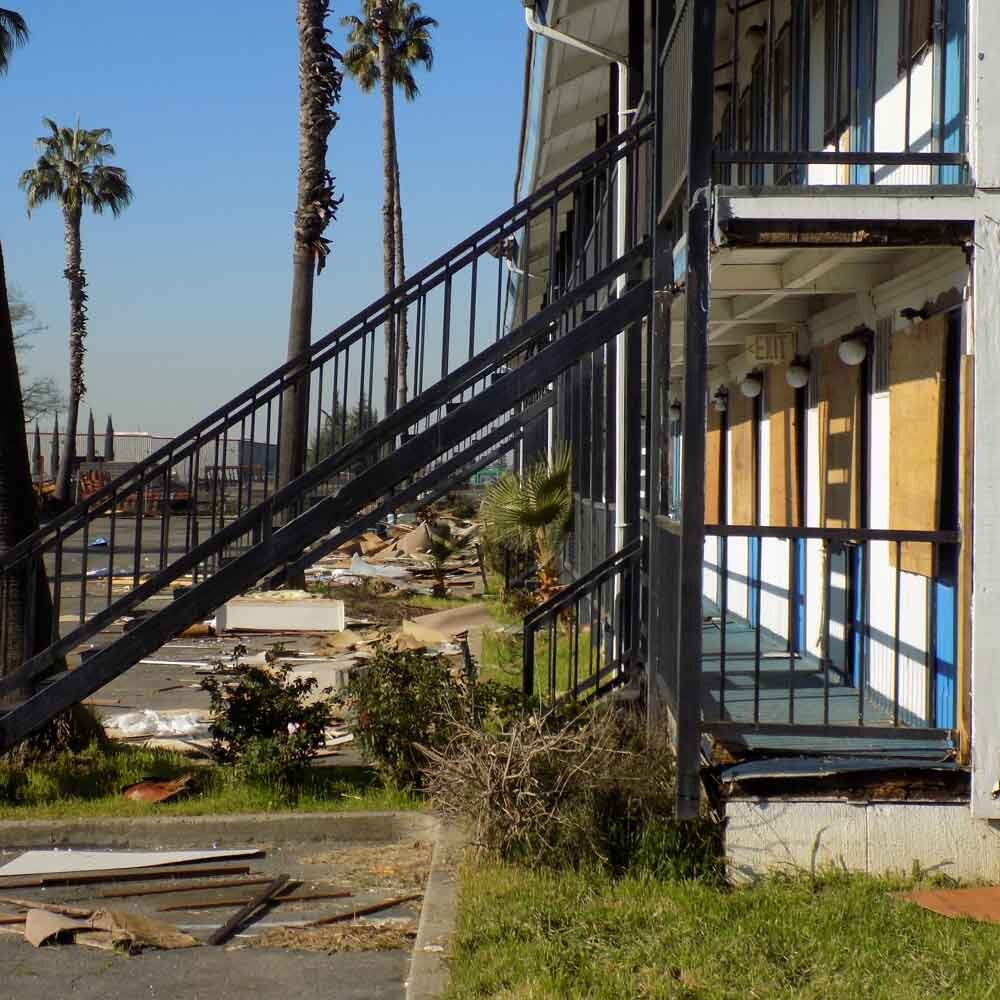
This dilapidated motel was open to the public despite dangerous conditions, including guest rooms that lacked running water, significant structural deterioration, unsafe electrical wiring, and evidence of asbestos. We reached the decision in collaboration with court and city officials that the building was not salvageable and should be demolished. We collaborated with six different fire departments to burn the motel down safely in a controlled practice burn.

This abandoned property plagued its surrounding community for almost a decade. That’s when the municipality decided enough was enough and petitioned the court to appoint CRG to takeover as receiver. Ten months later, the property looked dramatically different with the nuisance conditions completely abated. Shortly after a new family moved into this home decreasing the likelihood of further issues onsite.

A quiet neighborhood was plagued by a property owner who was operating an illegal junkyard across 12 residential lots. Shipping containers and other debris were used to fence around some of the properties, partially concealing numerous items including inoperable vehicles, shopping carts, tires, old appliances, and scrap metal. The majority of lots were vacant, but one lot had a single-family home in poor condition on it where debris was stacked up against it and junk strewn throughout the exterior. Another lot contained a burned-out structure that was not fit for human habitation, but which was occupied in some capacity. In addition to these hazardous conditions, occupants had trailed extension cords through windows to get electricity from one area of the property to another.

A popular ski town was threatened by a large home that endangered occupants and adjacent properties due to its unstable foundation, incomplete and languishing construction work, as well as a general lack of maintenance onsite. Construction work had been started on the home, but that work lay unfinished for months, which turned into years, permits expired and the structure further deteriorated. Trash and construction debris littered the interior and exterior of the home. Blighted conditions were visible from the street and the property was clearly vacant, with broken windows and an unhinged door, providing an attractive nuisance and clear opening for transients and curious children. Further inspection by the municipality confirmed that transients had in fact taken advantage of this opening and were living inside the hazardous structure. Crucially, the foundation was at risk as it had been set on an elevated but eroded patch of land and needed to be shored up.

It was almost impossible to see this home from the street. Overgrown, dry, and dead vegetation surrounded the house, closing in on the structure. Junk and inoperable vehicles crowded both the front and back yards, and the property was out of place in the clean, quiet neighborhood. But the visual blight was not the only issue that this property presented to this community.

After over two years of enforcement efforts to get the owner of this property to bring their home into compliance, the municipality red-tagged the house deeming it unfit for habitation due to the conditions onsite. Issues included no electricity or running water, piles of junk, evidence of pest infestation, human waste, unmaintained landscaping, and structural inadequacy.

Controlled practice burns are good for both the neighborhood and for firefighters, and these particular properties were found by a court to meet the criteria for demolition. This unique approach fits when a variety of factors exist: the nuisance property is not physically and financially salvageable; the nuisance conditions will not jeopardize the safety of firefighters or neighboring properties; and environmental and weather conditions will not spread the fire beyond a controlled area.

A menace to the local community, this 52-unit mobile home park was left to rot by those who were legally responsible for it, including its owner and the lenders who financed it. Years passed where the park existed in anarchy, with no one in place to ensure it was operating in compliance with local and state health and safety laws. During this time the park subsisted under perilous conditions, which endangered the lives of residents and the surrounding community. The onsite violations of health and safety codes were so severe that the park lost its operating permit, yet occupants continued to live in unsafe, dangerous and unregistered units onsite, in violation of multiple laws.

CRG was appointed to abate the nuisance conditions at this single-family home after multiple instances of unpermitted construction were discovered along with other dangerous conditions so severe that the municipality issued a red-tag for the property. Yet, the owner and their associates ignored the red-tag and continued to reside in the property, using a generator and unsafe electrical wiring to get power inside.

Given its location in a college town, we were surprised to find that this property had extreme hoarder conditions. Items were strewn about in piles that in some cases touched the ceiling. Every available surface was utilized and even the rats had died. The house appeared to have been deserted and there were signs that squatters had broken in and resided inside. The accumulation of debris was a significant fire hazard in addition to the degradation of the structure from lack of maintenance. We were able to completely rehabilitate this property, clean it out and fix the violations of state and municipal health and safety codes.

Prior to our appointment, this single-family home was left littered with accumulated trash and debris. There was significant damage to the roof, floors, walls, and ceilings, and it was not safe to be inside. The lack of maintenance of the property made it a haven for squatters and the home was the target of repeated break-ins. With very low marketable value, it was a challenge to find the most economical path to correcting the state and municipal health and safety code violations onsite.

As a result of poor maintenance and unlawful home renovations, where a beautiful American Craftsman style home had stood for decades, we were appointed as the Receiver of this property as it had fallen into significant disrepair. Broken, littered with trash, and the exterior space housing illegal trailers, the home was a sore point within its quiet, charming neighborhood. Constructed in 1913, one of the first homes built in the town, the degradation of the property was especially apparent given its location next door to the city’s historical society.
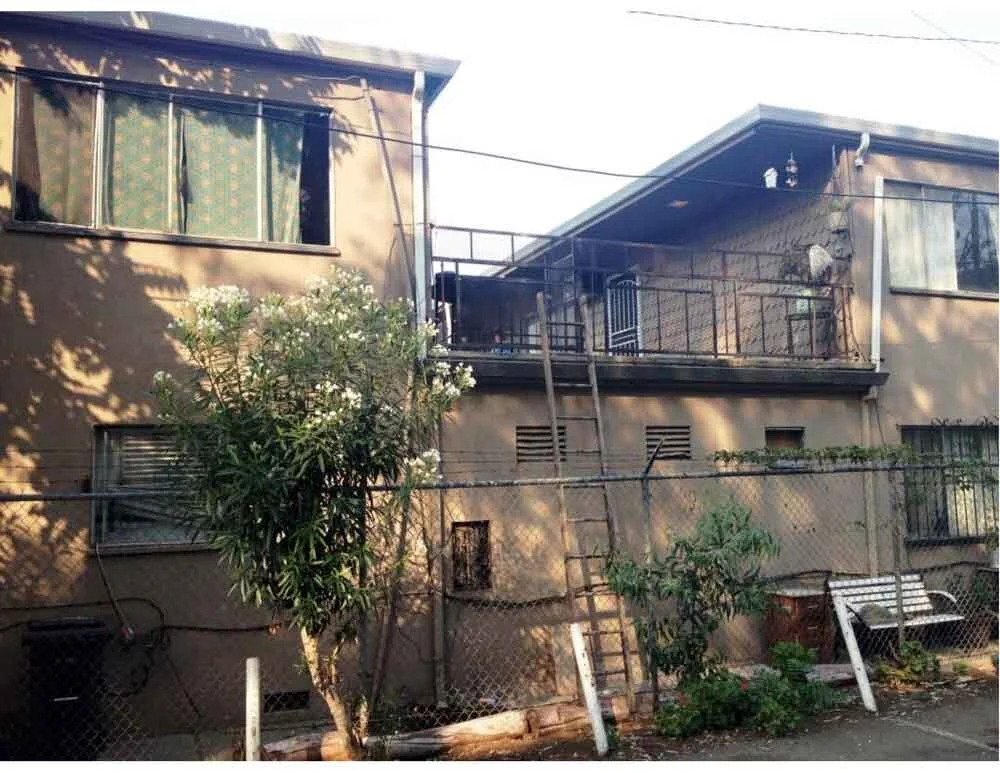
We took over this 14-unit apartment building after poor management rendered it unsafe for tenants to live in and it had become an attractive nuisance to local criminals. Municipal code enforcement found 84 violations of health and safety laws onsite, including broken stairs and doors, an exterior littered with graffiti and trash, inoperable plumbing, as well as apartments without working electricity. Despite the fact that vulnerable young children, as well as elderly tenants, lived inside the apartments, and even with multiple opportunities to fix the issues plaguing the property, the owner refused to cooperate. The lack of oversight of the apartment building did not go unnoticed; gang activity became prevalent, with heavy drug usage onsite.

This abandoned house was in very poor condition when we were appointed. Not only was there an accumulation of junk and debris, faulty electrical wiring and inadequate plumbing, but the roof was also severely damaged and there was an extensive leak. The exposed roof, combined with the lack of ceiling and wall insulation in parts of the structure, meant that it was riddled with mold and dry rot, which also compromised the structural integrity of the building and it was at risk of collapse.